
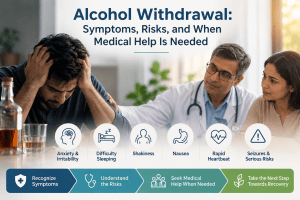
Create me a image fro this blog : Alcohol Withdrawal: Symptoms, Risks, and When Medical Help Is Needed
Stopping alcohol can be an important step toward recovery, but for someone who has developed alcohol dependence, withdrawal should be taken seriously. Alcohol withdrawal can range from uncomfortable symptoms to a medical emergency, which is why families should understand what may happen and when professional medical care is appropriate.
What Is Alcohol Withdrawal?
Alcohol withdrawal occurs when a person who has been drinking heavily or regularly reduces or stops alcohol consumption and the body reacts to the sudden change.
The severity of withdrawal varies from person to person. Factors such as drinking history, overall health, previous withdrawal experiences, and other medical conditions can affect risk.
Common withdrawal symptoms can include anxiety, irritability, sweating, nausea, difficulty sleeping, shakiness, and a rapid heartbeat. In more serious cases, withdrawal can involve confusion, seizures, or other severe complications.
Why Can Withdrawal Be Dangerous?
Alcohol affects the brain and nervous system. With prolonged heavy drinking, the body can adapt to alcohol’s presence. When alcohol is suddenly removed, that balance can be disrupted.
This is why someone with significant alcohol dependence should not assume that quitting suddenly without medical guidance is always safe.
Medical professionals can assess the risk of severe withdrawal and determine whether supervised care is necessary.
Detox Is Not the Same as Addiction Treatment
One common misunderstanding is that completing detox means the alcohol problem has been treated.
Detox focuses on managing the immediate physical effects of stopping alcohol. Long-term treatment can involve behavioral therapy, medication when appropriate, counseling, family involvement, and continuing recovery support.
NIAAA notes that treatment for alcohol use disorder generally extends beyond the initial withdrawal period and may continue for months or longer depending on the individual’s needs.
When Should a Family Seek Urgent Medical Help?
Families should treat serious or rapidly worsening withdrawal symptoms as a medical issue rather than trying to manage them alone.
Emergency medical attention may be necessary when a person develops severe confusion, seizures, significant changes in consciousness, or other serious symptoms.
When there is uncertainty about the severity of withdrawal, getting advice from a qualified healthcare professional is safer than attempting to manage a potentially dangerous withdrawal episode without medical supervision.
What Happens After Withdrawal?
Managing withdrawal is only one part of recovery.
A longer-term plan may include:
- assessment for alcohol use disorder
- individual or group counseling
- behavioral treatment
- medications when clinically appropriate
- family support
- relapse-prevention planning
- regular follow-up
Recovery is not necessarily a straight line. NIAAA describes alcohol use disorder as a condition in which setbacks can occur, and ongoing care may be important for adjusting treatment and supporting long-term recovery.
Final Thoughts
Understanding alcohol withdrawal can help families recognize when a situation requires professional medical attention. The goal should not simply be getting through the first few days without alcohol, but developing a sustainable plan for health, stability, and long-term recovery.
Medical assessment is especially important when there is a history of heavy or prolonged alcohol use, previous severe withdrawal, or significant health concerns.