
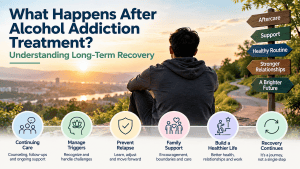
Completing an initial course of alcohol treatment is an important milestone, but recovery does not necessarily end when structured treatment ends.
For many people, the next stage involves building routines, managing triggers, maintaining support, and responding appropriately if difficulties arise.
NIAAA describes recovery as an ongoing process and notes that continued follow-up can be important for people working toward long-term recovery.
Why Aftercare Matters
Initial treatment may provide structure and professional support. Returning to everyday life introduces different challenges.
Work stress, relationship problems, social situations, emotional difficulties, and familiar environments can all affect recovery.
This is why a discharge or aftercare plan can be an important part of treatment. Quality-care guidance from NIAAA recommends planning for continuing support after the initial treatment period.
What Can Continuing Care Include?
Continuing care differs from person to person.
Depending on individual needs, it may include:
- follow-up appointments
- individual counseling
- family therapy
- behavioral treatment
- mutual-support groups
- recovery coaching
- structured community support
- medication when clinically appropriate
The appropriate combination depends on the person’s health, treatment history, recovery goals, and level of ongoing support needed.
Understanding Triggers
A trigger is a situation, emotion, environment, or experience associated with a return to drinking.
Stress is one commonly identified factor. Certain people, places, or routines may also become associated with previous drinking.
Recognizing these patterns can help an individual and their healthcare team develop strategies for handling difficult situations. Behavioral therapies can help people develop skills for managing triggers and reducing the risk of relapse.
Is Relapse a Failure?
A return to drinking can be emotionally difficult for both the individual and their family.
However, NIAAA notes that relapse can occur during recovery and should not automatically be viewed as proof that treatment was useless. It can be an opportunity to reassess what happened, identify contributing factors, and adjust the treatment plan when necessary.
This perspective does not mean relapse should be ignored. It means the response should focus on safety, assessment, and appropriate professional support.
How Families Can Help
Families can support recovery by encouraging healthy routines, respecting treatment recommendations, attending family sessions when appropriate, and maintaining clear and realistic boundaries.
Support does not mean taking responsibility for another person’s recovery.
Family members also need to look after their own emotional and physical wellbeing. Support services for families can be an important part of the recovery process.
Recovery Is About More Than Not Drinking
Long-term recovery can involve improvements in several areas of life, including physical health, emotional wellbeing, relationships, work, and day-to-day functioning.
Treatment should therefore be viewed as more than a short-term intervention. For many people, recovery involves ongoing adjustments and continued support over time.
Final Thoughts
Finishing treatment is a milestone, not necessarily the final step.
A thoughtful continuing-care plan can help a person transition from structured treatment into everyday life while maintaining appropriate professional and social support.
When challenges occur, seeking help early can make it easier to reassess the situation and strengthen the recovery plan.